

Buddha teachings : ค้นหาหนังสือธรรมะ หน้า 16 / 28
หน้าหนังสือทั้งหมด
83
Say No to Alcohol
Say No to Alcohol
The negative long-term effects of alcohol consumption are difficult to control and overcome. Not only is your own welfare at risk, but also the welfare of those around you, especial
The long-term effects of alcohol are detrimental not only to the individual but also to their family. Alcohol leads to destruction of wealth, health issues, aggressive behavior, loss of friendships, a
16
The Virtuous Lay Disciple Dhammika
While residing at the Jefavana Monastery in Savatthi,
the Buddha spoke this verse, with reference to
Dhammika, a lay disciple.
Once there lived in Savatthi, a lay disciple by the
name of Dhammika, wh
While residing at the Jefavana Monastery, the Buddha spoke about Dhammika, a lay disciple from Savatthi known for his charity and virtuous life. He led five hundred virtuous followers and had seven so
36
The Fear of Death and Eternal Wisdom
36
Buddha Meema
the Buddha expounded a discourse in appreciation (anumodana).
At the end of the discourse, Mahadhana the merchant attained sŏtapatti fruition.
He followed the Buddha for some distance
In a significant discourse, the Buddha speaks on appreciation and the reality of death through the story of Mahadhana, a merchant who reached sotapatti fruition but faced the harsh truth of mortality
28
The Virtue of Clear-Minded Youths
26
Clear-minded Youths — 3 The Story of Five Hundred Boys
The Buddha, hearing their words, said, "Monks, a monk like my son Maha Kassapa is dear to deities and men alike; such a man they delight to
In this discourse, the Buddha praises a monk, Maha Kassapa, for his virtue and insight, noting that he is respected by deities and men. The Buddha emphasizes that a person endowed with discipline, est
54
The Story of Culasubhadda
4
The Story of Culasubhadda
While residing at the Jetavana monastery, the Buddha uttered Verse (5) of this chapter, with reference to Culasubhadda the daughter of Anathapindika.
Anathapindika and U
The story revolves around Culasubhadda, the daughter of Anathapindika, who faced challenges in her marriage due to her parents-in-law's non-Buddhist beliefs. Living in the house of Ugga's family, she
29
The Enlightenment of Koṇḍañña
his Enlightenment for the benefit of the ‘Group of Five’ — Enlightenment that is supreme in the human world, angel world, Māra-world, Brahmā-world, animal-world, world of monks, world of brahmins, wor
This text discusses the pivotal moment when Koṇḍañña achieved enlightenment after listening to the Buddha’s teachings, recognizing the nature of arising and cessation within himself. The earth-sprites
45
The Buddha's Teachings on Right Livelihood and Moral Conduct
the monk's equivalent of Right Livelihood, by avoiding such evils as fortune telling, sacrifices or interpreting dreams, because these are all 'low arts'[tiracchānavijjā]. The Buddha even prohibited m
This text discusses the Buddha's teachings on Right Livelihood, emphasizing the avoidance of 'low arts' such as fortune telling and the prohibition of harmful trades for monks and laypeople. In partic
52
Understanding Suffering in Buddhism
1.3. Suffering as an affliction
This third meaning of suffering shows the direct inter-rela-
tion with the fourth Noble Truth of the Path of Practice for
an end of suffering. That suffering is an affl
This text discusses the nature of suffering in Buddhism, emphasizing its inter-relation with the cessation of suffering as outlined in the Noble Truths. It highlights that suffering is akin to an affl
56
The Noble Eightfold Path and the Cessation of Suffering
"The wise one who trains himself [yoĝāvācara] should see that the builder is ‘Craving’ who fashions the home that is the physical body of each and every living being, to keep those living beings being
This text delves into the teachings of the Buddha regarding the nature of craving as the cause of suffering and the means of escape through the Noble Eightfold Path. The concept of the 'Elixir of Deat
60
The Noble Truth of Suffering
The OCR result from the image reads:
---
**4 The Noble Truth of Suffering**
Every living being is a victim of suffering
The Lord Buddha explained the nature of suffering in detail. The Pali word for
The text delves into the concept of suffering, known as *dukkha*, as articulated by the Lord Buddha. It defines *dukkha* by its roots, explaining the inherent negativity of existence. Without sufferin
105
Rediscovery of the Dhammakāya Tradition
mentaries for most people to understand. The knowledge of Dhammakāya is said to have diminished and eventually for some unknown reason, disappeared from Buddhism approximately 500 years after the Pari
The Dhammakāya tradition, once diminished in Buddhism, was revitalized by Luang Phaw Wat Paknam who dedicated his life to its teachings. His outreach efforts led to the tradition being acknowledged in
114
The Path to Nirvana: Understanding the Dhammakāya
with which his mind had been engrained for countless lifetimes polluting his thoughts, speech and actions — which had led to retribution and leading to his continuing rebirth in the cycle of existence
This text discusses the purification of the mind through the teachings of the Buddha, emphasizing the importance of the Dhammakāya Arahat Body and the attainment of enlightenment. The Pathama Magga re
189
The Path to Enlightenment: Insights from Bahiya Dārucīriya
people cite examples of enlightenment such as that of Bahiya Dārucīriya who, in his final lifetime didn’t appear to mediate, but could become enlightened just by hearing a few words from the Buddha at
In examining the enlightenment of Bahiya Dārucīriya, it is essential to recognize his previous lifetimes where he dedicated himself to achieving enlightenment through intense meditation. Alongside fel
242
Glossary of Key Buddhist Terms
Kakusandha (P. the name of a käya samphassa (tactile contact: past Buddha) see sense-contact)
kalla (see embryonic precursor) käyasucarita (see wholesome
kāma (see sensuality) physical deeds)
kāmabhav
This text provides a glossary of key Buddhist terms, including definitions and insights into concepts such as Käyasucarita (wholesome physical deeds), Kāmabhava (sense-sphere existence), and various f

38
การฝึกสมาธิที่วัดพระธรรมกาย
Throughout the course the
students live at the center, meditating
and sleeping in the grounds
under
umbrellas (klod). The sight of some 300
monks, their saffron robes contrasting
with the green of the
Throughout the course the students live at the center, meditating and sleeping in the grounds under umbrellas (klod). The sight of some 300 monks, their saffron robes contrasting with the green of the

65
การสนทนาเกี่ยวกับอริยสัจ
ANLAYANA
NAMIT LETTERS FRO
D
ERS FROM KANLAYANAMIT
M KANLAYANAMIT LETTERS FROM KANLA
T LETTERS FROM KANLAYANAMIT LETTERS FROM
FROM KANL
ANLAYANAN
LETTERS F
KANLAYAN
TERS FROM
NAMIT LET
LETTERS FF
M KA
ANLAYANA NAMIT LETTERS FRO D ERS FROM KANLAYANAMIT M KANLAYANAMIT LETTERS FROM KANLA T LETTERS FROM KANLAYANAMIT LETTERS FROM FROM KANL ANLAYANAN LETTERS F KANLAYAN TERS FROM NAMIT LET LETTERS FF M KA
49
The Tathāgata and Brahmā: A Semantic Analysis
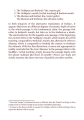
1. The Tathāgata and Brahmā,48 the creator god
2. The Tathāgata's mouth (verbal teaching) & Brahmā mouth.
3. The dhamma and Brahmā, the creator god; or
The dhamma and Brahman, the ultimate reality.
I
This passage delves into the nuanced relationships between the Tathāgata and Brahmā, highlighting the semantic layers present in verbal teachings. It contrasts the Tathāgata's mouth with Brahmā's, ind
87
Buddhist Manuscripts in China: Theravāda Buddhism in Sipsong Panna
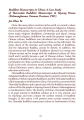
Buddhist Manuscripts in China: A Case Study of Theravāda Buddhist Manuscripts in Sipsong Panna (Xishuangbanna, Yunnan Province, PRC)
Joe Zhou Ya
China, like many other countries in the world, is a c
This article delves into the rich tapestry of Buddhist culture in China, specifically focusing on the Theravāda Buddhism of the Dai people in Sipsong Panna, Yunnan Province. Buddhism's introduction to
17
The Importance of Dhamma in Modern Society
This belief encouraged those well versed in new ideas and knowledge, but lacking morals instilled by the Dhamma, to take advantage of others for selfish gain. These people sabotaged the economic and s
This text discusses how a lack of moral values rooted in Dhamma leads to selfish actions that hinder economic and social growth in Thailand. It emphasizes that worldly knowledge is insufficient withou

135
เป้าหมายของพระพุทธศาสนา
assured of His enlightenment.
(เนื่องจากทรงปฏิบัติกิจที่จะต้องทำในอริยสัจ ๔ เสร็จสิ้น
สมบูรณ์แล้ว พระสัมมาสัมพุทธเจ้าจึงทรงมั่นพระทัยปฏิญาณ
พระองค์ว่าบรรลุอนุตตรสัมมาสัมโพธิญาณแล้ว)
A : Is the goal of
(เป้าหมายของพระพุทธศาสนานั้นมีที่มาจากปฐมเทศนาใช่ไหม ครับ) B : Yes, it is. Actually there's more than one goal of Buddhism. And the ultimate goal of Buddhism is the end of suffering or Nirvana. (ถูกแล